On the 25th of November I sat down with karen elaine spencer, an established artist with a laundry list of awards, grants, projects and accomplishments. Most importantly though, she’s my mom. We talked past and present inspirations, messages conveyed through her work as well as a general disdain for the aristocracy over a beer and Nanaimo bars.
N.810 – What was the moment you decided to pursue art as a career?
karen elaine spencer – When I was 8 years old I lived in Trail, British Columbia. There was a girl down the street who had an older sister, one day we were playing hopscotch and I made up my own words. The older sister was with us and she stopped the game and said, ‘That’s really good did you just make that up?’ I was like ‘yeah‘ and she said, ‘That’s really good!’ That froze me I was terrified and kept saying, ‘No, no it’s not good it’s not good‘ and I went home really upset because I felt… it was scary. I was afraid of something. We moved to Richmond and it was clear that our family wasn’t going to make it. I was… devastated, angry, I felt like everything up to that point had been a lie. I think I was depressed, but in those days, they never thought a kid would be depressed. I went through a hard time and didn’t know what to do. I was working at a flower shop in grade 11 at the time and bought a book called The Penguin Book of Women Poets. I loved that book, I loved reading it, but it was really discouraging because all the women were either born into aristocracy and wealth or died in extreme poverty. I thought, ‘Oh crap, I’m not an aristocrat…’ so it wasn’t going to end well. But I was still drawn to words and to poetry. I saw three shows that impacted me and they all had an element of writing to them. One was Cy Twombly who does paintings which look like they could be writing before writing. Another was Liz Magor who had a piece with lead weights, she had them in different configurations and it told the story of a woman. The last was Ed Ruscha who did bookworks. These works really spoke to me… I felt some kind of knowing or recognition that you couldn’t really put into words. There’re these possibilities, you can do your work and it can be as diverse as these three works, somehow all three of them through doing what they were called upon to do had an impact on an 18-year-old. It seemed with my depression and my family falling apart, art was a space where I could deal with the stuff I couldn’t deal with anywhere else. I decided at that point I wouldn’t be a poet because I wasn’t aristocratic and I didn’t want to die in poverty. I would be an artist, not knowing of course that it could also end just the same. It seemed like the chances were better. So, I just continued on, kept continuing and I’m still continuing.
N.810 – You mention being inspired by works that used writing in them. When did you decide to adopt this motif for your work?
k.e.s. – I feel like art is already laid out inside you and you have to accept it, and that’s scary. Playing hopscotch, I was afraid of being seen. So, when that older sister pointed it out so blatantly it made me run away. That’s kind of my strategy in life, if I’m afraid I run. Initially I wanted to learn how to paint, I wanted to learn the skills, I wanted to fit into what I thought a painter should be. Go to your studio, move paint around, create something and that’s it. Even then there was this call to use text, which was probably always there but it didn’t come out until I had a feeling of disenchantment from painting. I felt the art world was like every aspect of life at that time, the way I articulated it to myself was that it was just scummy. In my mind at the time I thought it had nothing to do with the work and it had everything to do with who you knew, who you were sucking up to. It felt so wrong to me and it took the joy out of painting. That led to other works, audio and performative work because there’s no way you can own it, there’s nothing to own. Of course, that’s not true but that’s what I was going for. It was a crisis of faith.
N.810 – It’s shitty to think of it that way but art is still a product. It’s still contained in a capitalist society, it still comes down to its market value.
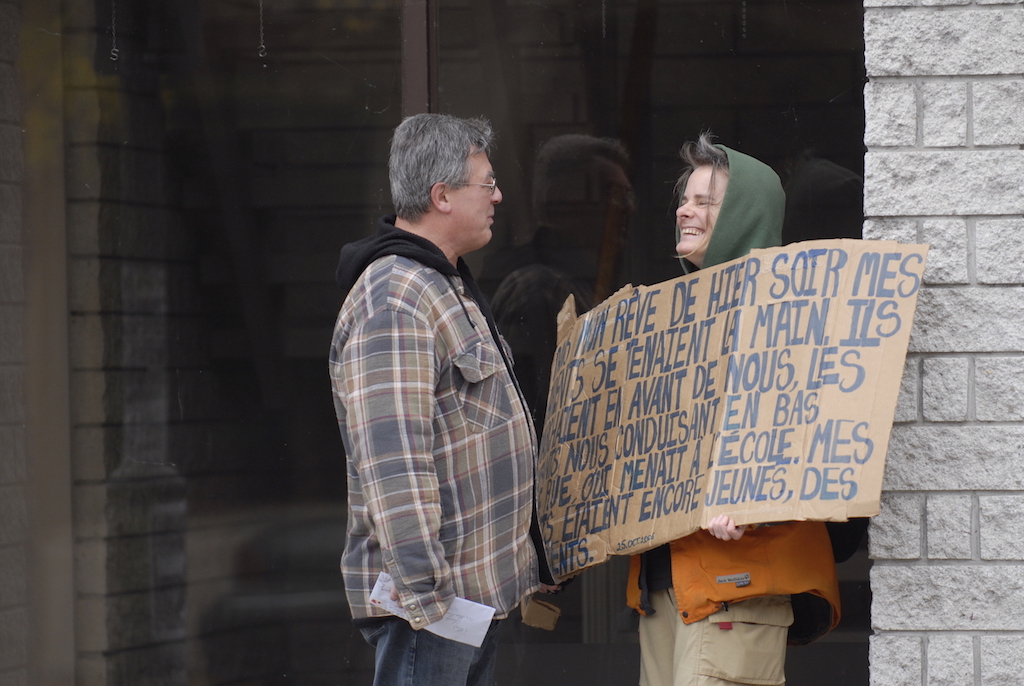
k.e.s. – Now I think students and people of your generation are way more aware, but if you’re painting on canvas, your end resting place before you even start your work is either somebody’s home or a museum because that’s where that work goes. It’s already preordained that it’s going to one of those places, you’re already inserted within that system. I thought that if your work wasn’t destined for those markets you could work outside of the market, but you can’t. I don’t think there’s anything left that’s truly holy outside the market because that’s how we survive, that’s how we assign value, it’s so pervasive unless you’re… you know… born an aristocrat.
N.810 – Is there a reason you came back to working with a physical medium that has a physical end product?
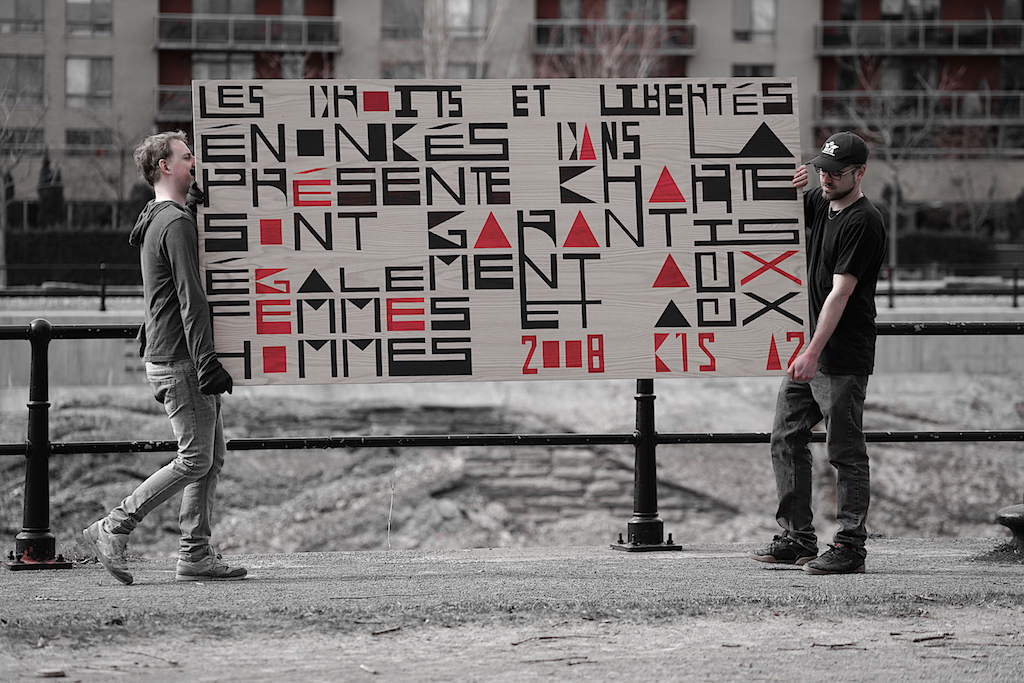
k.e.s. – I was working a lot on the street, that was my place of dissemination. That led into an investigation of government policies and laws. How those structures impact and control everybody’s behavior. Some of them are specifically aimed at street involved people, they can be used in the event that they need to move a certain population away. So, I started thinking about how can I talk to the people who are making those policies? Hey, I’m an artist! This is the milieu where art functions! Generally, people who acquire art are not poor, they have access to funds and that generally means they’re educated and have a certain leverage of power. I had this feeling that if I just kept it all street-level it would never do anything and I wanted the art to perform something.
N.810 – You play this fine line where projects are centered around you and your solidarity but performed in a public sphere. What’s the goal of being alone in public?
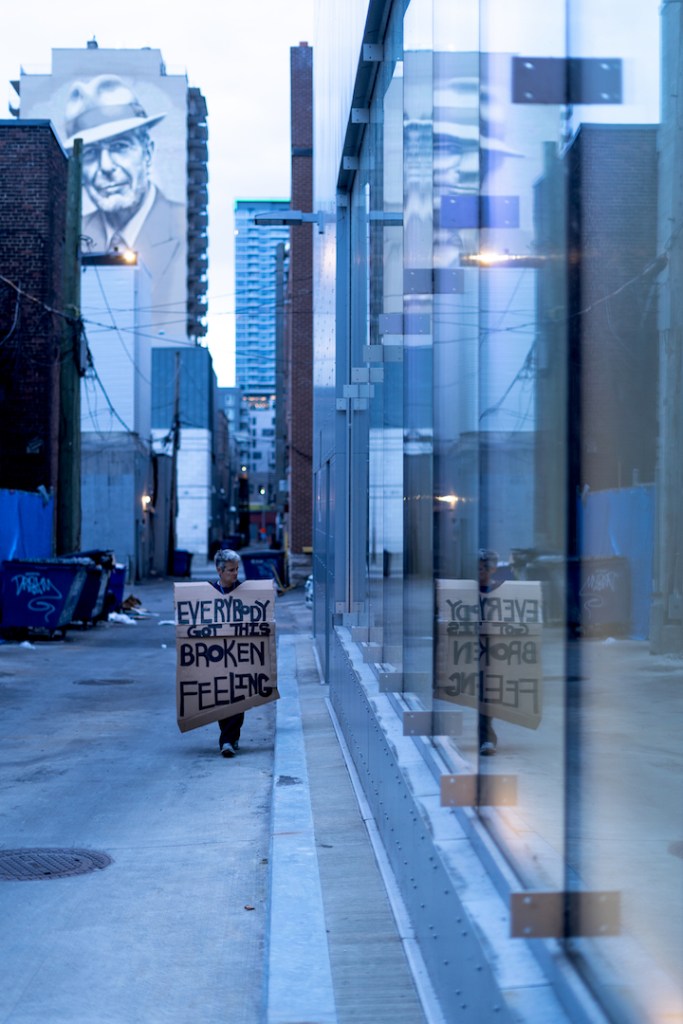
k.e.s. – In one way I’m uncomfortable working in a group, but I’m really interested in this idea that we can open up each other’s imagination and make something possible by doing it. With metro-rider for example, I didn’t want my name used because I wanted people to know that anyone could do that. You can ride the Metro and watch people. You don’t have to be going anywhere. You don’t have to have any reason, you can just do it. You can take the space and do it. Same with ramblin’ man, you can walk around the city and start singing, you can give yourself permission to do those things. With dream listener you can stand on a street corner and hold your dream, we can do those things. There are so many things we can do that we don’t because it’s hard to give ourselves permission. I wanted this to be a space of imagining and for other people to do what they imagined they wanted to do. There’s something about being visible. Not drawing attention to itself, not being a spectacle, but just being with other beings. There’s something powerful in that. You can inhabit these spaces and I think that when you witness other people inhabiting space it gives you permission to do it as well.
You can follow karen elaine spencer @
https://likewritingwithwater.wordpress.com/
instagram.com/karenelainespencer
Soundcloud: https://soundcloud.com/user302906637?fbclid=IwAR2yFw6yAZF-HGMgTIgGpyA1mxkL_pv_FnSINFP_bO_a4oW-s-_ozVOe0dY
Youtube: https://www.youtube.com/channel/UCDrgxYXwO3zBFeMjKBBOpbg
 Numero810