
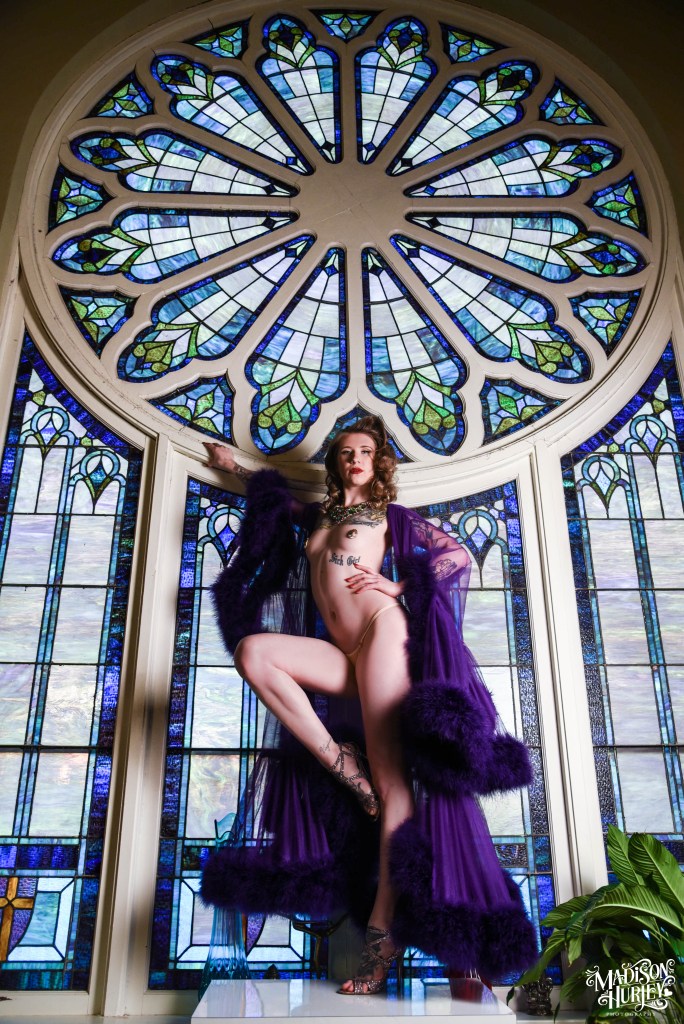
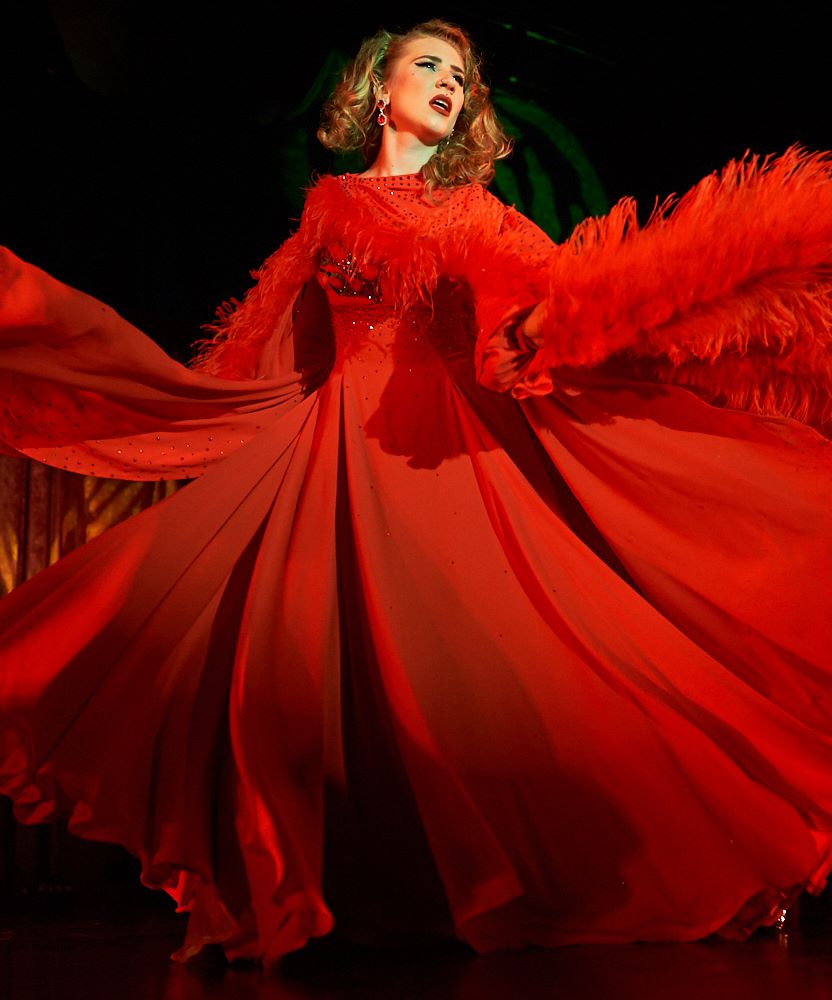
On the 8th of December I sat down with Sugar Vixen, a burlesque performer out of Montreal. Sugar Vixen has garnered a well-deserved reputation as the burlesque queen of rock and roll, winning Queen of the Lake in 2019 as well as being runner up in Cult MTL’s Best Burlesque Performer in 2018. In our discussion, Sugar touched on her inspirations, what goes into an act, and the politics of burlesque over a tequila soda.
N.810 – Where does the line between you and the character you’re portraying on stage begin and end?
Sugar Vixen – In my day to day life I’m pretty introverted and value my alone time, so on stage I become this highly extroverted larger-than-life rockstar. Music is my number one love and so people like David Bowie or Robert Plant we’re highly influential to me, I loved the Glam Rock androgyny, gender-bending and appearing larger than life. When I first started burlesque it was very easy to create a subversive pin up character where I could be a 50’s housewife cooking dinner, but serve a severed head on a platter. That’s the kind of stupid shit I was doing when I first started. Now it’s a little more implicit than explicit. There’s always this larger than life cock rock persona I portray because I want to be more like that in my everyday life. You create these personas that will protect and help you navigate this world. Let’s say I’m in a bar and I sense some kind of danger from somebody that I don’t want to talk to or be around. Sometimes I’ll feel myself assuming a character, which is interesting to me, being able to unpack that, taking a step back and seeing that happen. The way I story-tell is through my costume which I’m strip teasing. The cool thing about burlesque is that your costume is your choreography, because you have to work with movements to take these pieces of clothing off. You can’t just engage in a dance number and then take your dress off and pitch it, it needs to be thoughtful. You have really important choices that are going to inform your story, your character and the different themes you convey on stage. If you go on stage leaving your audience like, What the fuck just happened? Maybe you need to tweak some stuff.
N.810 – What’s your process for creating a new routine? Do you have any tells if it’s going to be a good one?
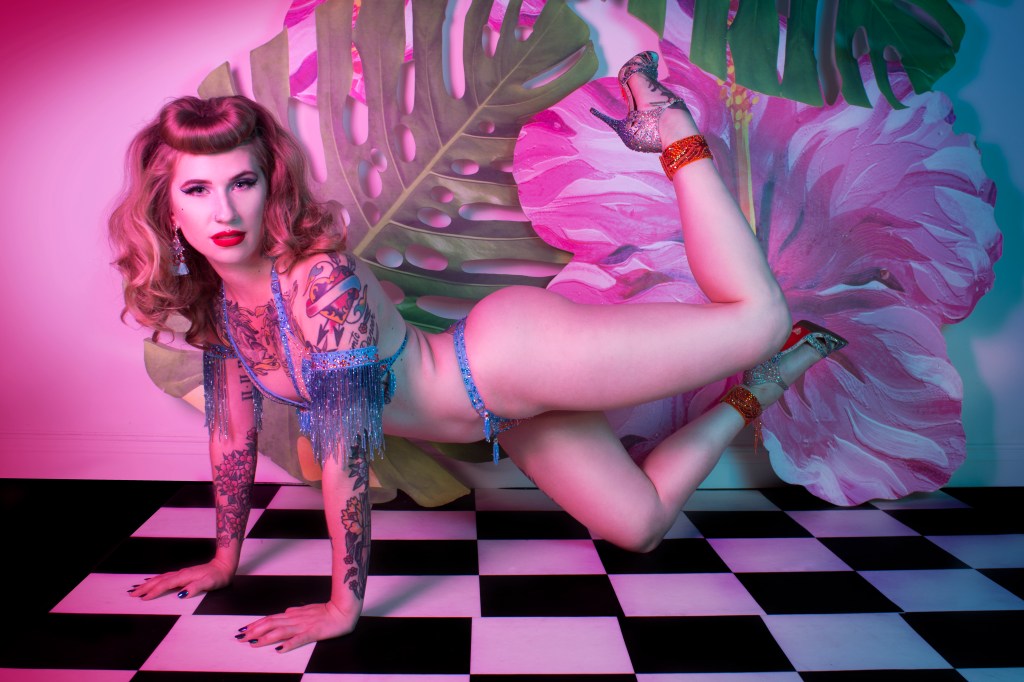
S.V. – For me it starts with the music. Like I said, music’s always been my number one love and that’s where I’m most inspired. When I choose a song, immediately I know what my character is wearing in terms of colour, I know which music evokes the emotion I’m looking for. Right there you have two extremely important elements that you can base the rest of your number off of. The last thing I do is choreography, because it’s more formal and takes being fully engaged. It’s like reading a piece of dry academic text, that’s what choreographing is like to me, every single note and crescendo is how I choreograph the key points in the dance, it’s very formulaic. For the second part of your question, I can tell it’s going to be good if it feels good. I workshop my burlesque acts with my peers and vice-versa. People overlook that creating a thoughtful and impactful signature act can take years. One of my signature acts is called Fire, it’s performed to Light My Fire by Shirley Bassey and that fucking thing took me four years of continuous work.
N.810 – Do your beliefs intertwine with your burlesque?
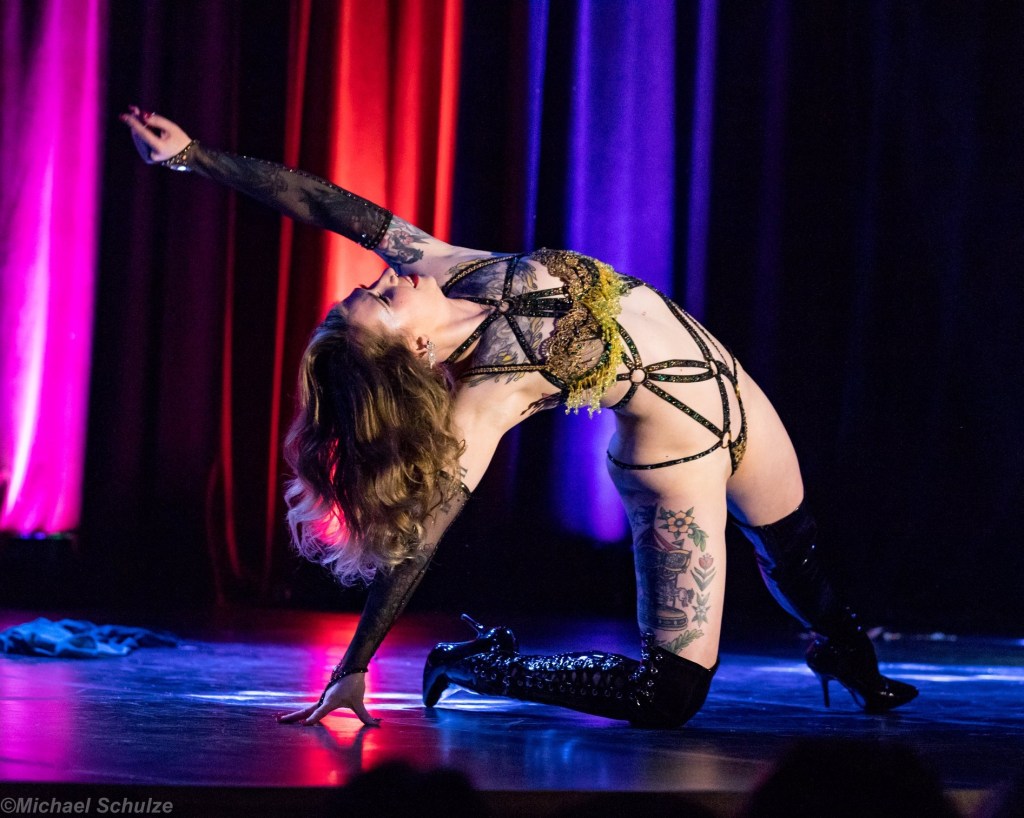
S.V. – Yes. My beliefs, my values and how I navigate this world are all incorporated, because burlesque is inherently political. We’re talking about bodies that are transcending stereotypes and what’s accepted in society. Granted, when I started burlesque I was younger, I had my first performance when I was 19. I was naïve, I thought, ‘This is so joyful and amazing and subversive!’ Granted, it is, but what I know now is, any mode of marginalization that happens in society can still infiltrate any community or microcosm. The people that get big corporate gigs that pay the most are typically going to be slim and conventionally attractive. There’s still a lot of work that needs to be done. In Europe for example it’s not atypical to see instances of cultural appropriation, a few years back a white performer was called out for wearing a native headdress on stage. ‘Higher’ education is inherently a privilege, but it’s still important to seek out information surrounding issues of race and gender when performing in a public sphere. Yet we see it happen in all different fields; the film industry, professional dance, or even in fucking academia! Tell me why Indigenous Studies, if and where it’s offered, will have a predominantly white faculty?
N.810 – How do you see these issues of body acceptance, race and culture fitting into burlesque?
S.V. – The place for activism in the realm of burlesque exists because this art form is inherently radical. It’s about celebrating creative self-expression, liberation and feeling comfortable in your body. How any performer interprets that is up to them, I am quite literally taking my clothes off, but figuratively I’m stripping away the layers of socializations that have been encroached on me as a cis female. To me it’s extremely cathartic to express myself and tell a story. There’s always a message of transformation or self-acceptance, reclaiming a power that might’ve been taken from me or instances where my voice has been stifled… Yeah… That really made me feel awful. It’s healing to be able to create art that is so personal. But it’s very much for me. I know all of this, but maybe my audience just perceives entertainment, and that’s okay. There’s an absolute agency on behalf of the performers. They’re choosing to be there, expressing themselves, re-claiming their identity.
N.810 – How would you distinguish burlesque from sex work to those that claim they are one in the same?
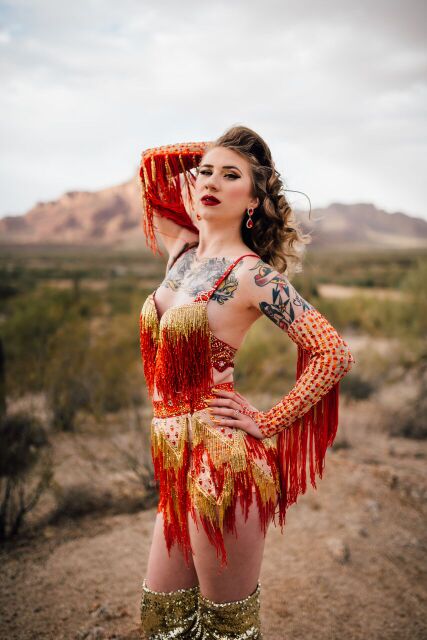
S.V. – There’s a common misconception that if burlesque is stripping, it’s sex work, but that’s not true. People taking off their clothes as a mode of entertainment can be perceived as a transaction like what happens in a strip club. The difference is, burlesque is a sit-down cabaret mode of entertainment where performers share their art. Any rowdy group that shows up to a burlesque show will be told that’s not the dynamic, because it’s a show. Stripping on the other hand is a transaction that is physically, mentally and emotionally laborious. People are paying you to dance or spend time with them and it’s simply not the dynamic of a burlesque venue. From my experience, burlesque involves an absolute agency on behalf of the performer whereas the choice to strip can be informed by one’s livelihood. Stripping is a job, even if it doesn’t look like a traditional 9-5. There’s absolutely no shame to be had in strip clubs, I’ve worked both and I’m happy. I’ve learned so much from my experience inside a club, just being an introvert able to navigate a crowded room on a Saturday night. It’s important to note that as recent as the 90’s there was a divide between burlesque performers and strippers. Some burlesque performers saw themselves as above strippers, but in more recent years you see a lot more crossover. It’s extremely difficult to sustain a living solely off burlesque, oftentimes people teach, strip, make costumes, or work to compensate. I think that’s one of the contributing factors to why stripping and burlesque have come closer together, there’s more crossover than ever. That hierarchical thinking that you’re better than others is something that often happened, specifically within the realm of sex work. It’s upsetting… It makes you fucking classist and there’s absolutely no time or space for that in the scope of sex worker activism.
You can follow Sugar Vixen @
facebook.com/sugarandspicebutnothingnice
 Numero810