
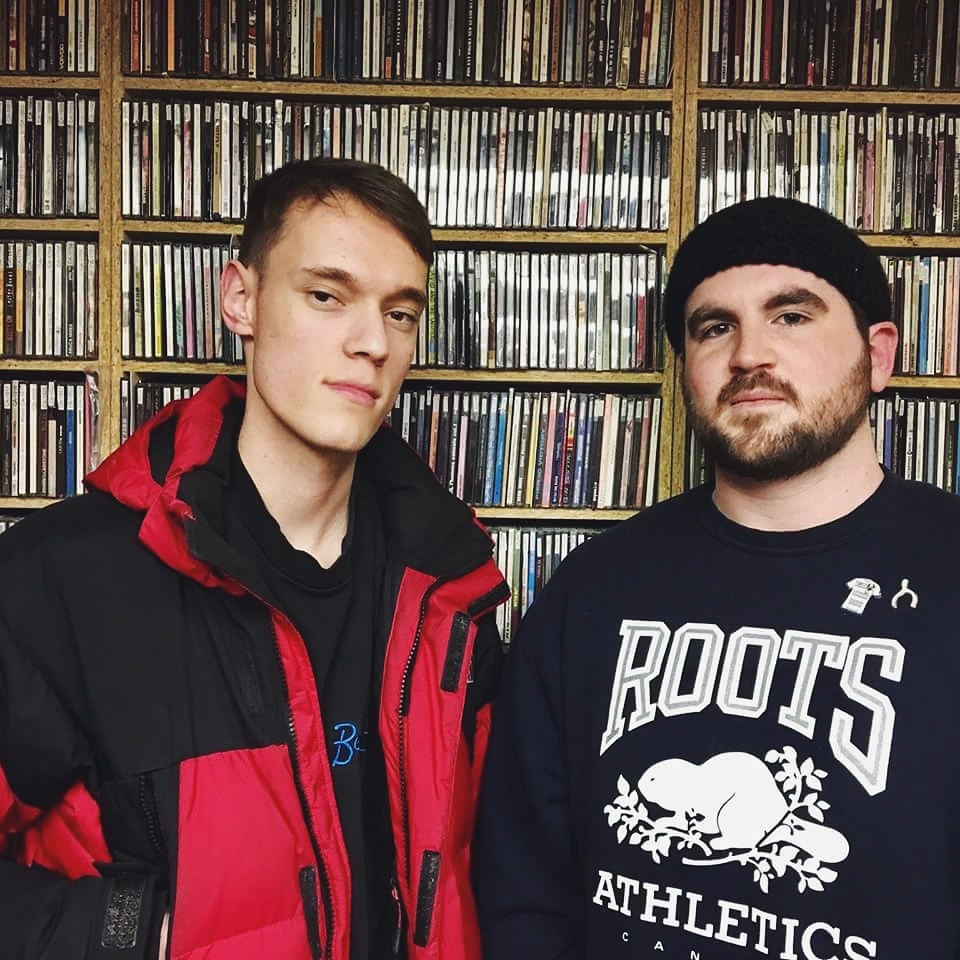
On the 3rd of November I talked with Tibe, an acclaimed music producer with over 220,000 streams on Spotify in 2020. We discussed the philosophy behind his music production, the advantages and disadvantages of certain processes and going with your gut, all over a cup of coffee.
N.810 – When did you realize you wanted to pursue music production seriously?
TIBE – When I started making music I was 15. It became such a part of my life, by the time I was 17-18 I was neglecting Cegep, it was taking up too much of my time. Then I started playing shows, it was really just this one wave of momentum, it wasn’t a cognitive realization like, ‘Oh shit! All these things are coming together and I can take this more seriously,‘ it just happened. Now that I’m older I have to make decisions, how do I spend my time effectively? But when you’re 17 or 18 you’re just doing it, you’re doing what you do. Now when I think about it, I ask myself, ‘how can I achieve my goals with music?’ How does school fit into this? How do I navigate both of these responsibilities? I want music to be a big part of my life, I’ve been expanding as a producer and working more with vocalists, but because of the pandemic it’s hard to link up with people. I know other creatives over the internet and eventually it would be cool to link up with them. I’m just at home and when I want to make music it’s all because of me. It’s hard to find motivation being inside all the time, you know? Not living normally, not working with people and collaborating in person, it’s hard to stay motivated. It has to come from within because we’re not getting inspiration from outside or other experiences.
N.810 – So you know what you want out of music, but how do you make that happen? Maybe music school?
T. – That’s the age-old question for any artist right? The thing with music theory is whenever I learn a bit of it I find it constrains my process. I start thinking about a rule, and in overthinking this rule it becomes difficult to do the things I feel. I’m so focused on what’s ‘right’. At this point I think I have what it takes to produce for dope artists. It comes down to grinding a lot, meeting the right people and staying focused. If you produce fire, people will notice you eventually. Some private schools for production are 20 grand a year and I already know the fundamentals of music production. It’s just a huge amount of money. I feel I should just grind it out on my own. I should be grinding and reaching out to different people… yeah.
N.810 – I mean half the reason to go to school is for the connections you make right? So, if you don’t need those or the technical knowledge…
T. – Yeah, I think Montreal is not necessarily the greatest space to thrive as a music producer. It has a very niche sound, and I’m striving for more than a Quebec or Canadian scene. I’m not always on board with the stuff I hear from Montreal. It’s a diverse and emerging sound, I just don’t always know how I fit into that.
N.810 – So how did you get started producing music?
T. – My brothers and I always played instruments, and music production was a fresh instrument that was really boundless. You could create anything you wanted and that was very appealing to me. I listened to a lot of beats and was inspired. I wanted to make exactly what they were making and you couldn’t really do that with a saxophone.
N.810 – do you ever jam out with your brothers?
T. -We haven’t had too many sessions with all of us producing together because sometimes it’s hard to work in that dynamic. If you and I are making a beat and you don’t really like a sound I’m moving towards, there are moments where you can step on each other’s toes artistically. It gets tricky.
N.810 -Did you ever collab with other people in the same room or was it mostly a solitary process through the internet?
T. – I worked with a couple of artists; friends of mine, rappers. We would chill and write stuff together. There are trade-offs to both situations, sometimes having a session in person can give you a certain result, but taking a look alone can give you a different one. It’s hard to tune into your vision if you’re with someone because the process of writing is so personal. Sometimes if I’m writing with people I’ll question whether what I’m doing is fire. Should I pursue this idea? That sort of thing can happen with people, especially people you aren’t familiar with or you don’t vibe with. It’s important to work with people you vibe with. You like them as a person and share the same vision. That’s a good formula, the most important thing is having a good time. You can write a dope idea but if the vibe isn’t natural it feels alienating, it can make you feel alone in a way.
N.810 – Do you have any tells that a song is going to bang while you’re making it?
T. – I’ve made a song in 6 hours and it felt like time sped by. If you make a song and it feels like you’ve gone through it quickly and everything feels right, it can be a really good tell for something dope. But that aside, thinking more analytically about what you’re making and questioning the elements of the song can also lead to good stuff. Different processes have different strengths. Relying on your intuition and not thinking too much can lead to good results. It’s hard to say definitively which processes is best, but I think it depends on the context in which you’re making music. I have these discussions with my older brother all the time, about the intuitive process of not thinking and just doing versus being more critical. I feel like there’s a fight in every artist’s mind. You might write something and in the midst of writing you’ll think, ‘man this sounds like this, I don’t want to do that.‘ So you erase it instead of just writing the fucking thing and looking at it like, ‘alright what have we got here? What’s on the page?‘ Both those mentalities lead to different types of pieces. What’s your take on gut versus analytics do you find yourself erasing and being like this sounds like Robert Frost for example?
N.810 – I’m a super go with my gut kind of guy. If it sounds like Robert Frost fuck it, I’m the new Robert Frost. Over analytical stuff ends up being harmful to the content I find. Usually you have it right on your second or third pass, once you hit the 4th or 5th edit you can lose the emotional carry it had when creating it. You lose the vibe and it becomes sterilized.
T. – There’s a quote, ‘Art is never finished only abandoned’ and it’s true. But like what you were saying, you can keep editing something for so long, you might have gone in a really lame direction because you spent too much time on it. You lost sight of what you started and you’ll think, ‘Where am I right now? What is this? Where have I gone?‘ You can milk an idea until there’s nothing left.
N.810 – So what’s your battle? Are you a gut guy or formula guy?
T. – I do both, I think it’s good to do both. Switching up the ways you write music helps to stay inspired. These days I go off my gut mostly, if I start something and 20 minutes down the line I don’t know what to do with it, I’ll stop and write something new. On to the next one! It’s fun to speak about artistic processes with people because we all have our own relationships with them and it’s dope to hear people’s takes on it.
You can follow Tibe @
open.spotify.com/artist/4AIBWTy1SuwnrbO2LhIZU2?si=OUfE4Js2RRW9uVs-MHBtZA
 Numero810